HOLD, RELEASE, WRAP
TAP TO MATCH THE PATTERN
DRAW TO CONNECT
AI GAME TEMPLATES
I was the first on my team to build game templates with Effect House AI. Across four of them, I worked with engineers, a PM, and design reviewers to make AI builds playable and templates easier for creators to customize.
- PROBLEM
- New AI-built games needed clear rules and practical creator controls.
- MY DECISION
- I used playable prototypes to settle gameplay and simplify customization.
- SHIPPED
- All four templates shipped with R&D, PM, and design review.
- EVIDENCE
- The first three reached 10.4M+ views in September 2026.
THE numbers
Effects made by creators using these templates.

Videos published using those effects.
Views of those videos.
September 2026 snapshot. Totals for Fruit Drama, Timing Match Clear, and Line Drawing Precision. Matching with Lines is excluded. Total views are approximate because the source figures were rounded.
THE RESULT
Choose a card to change the story.
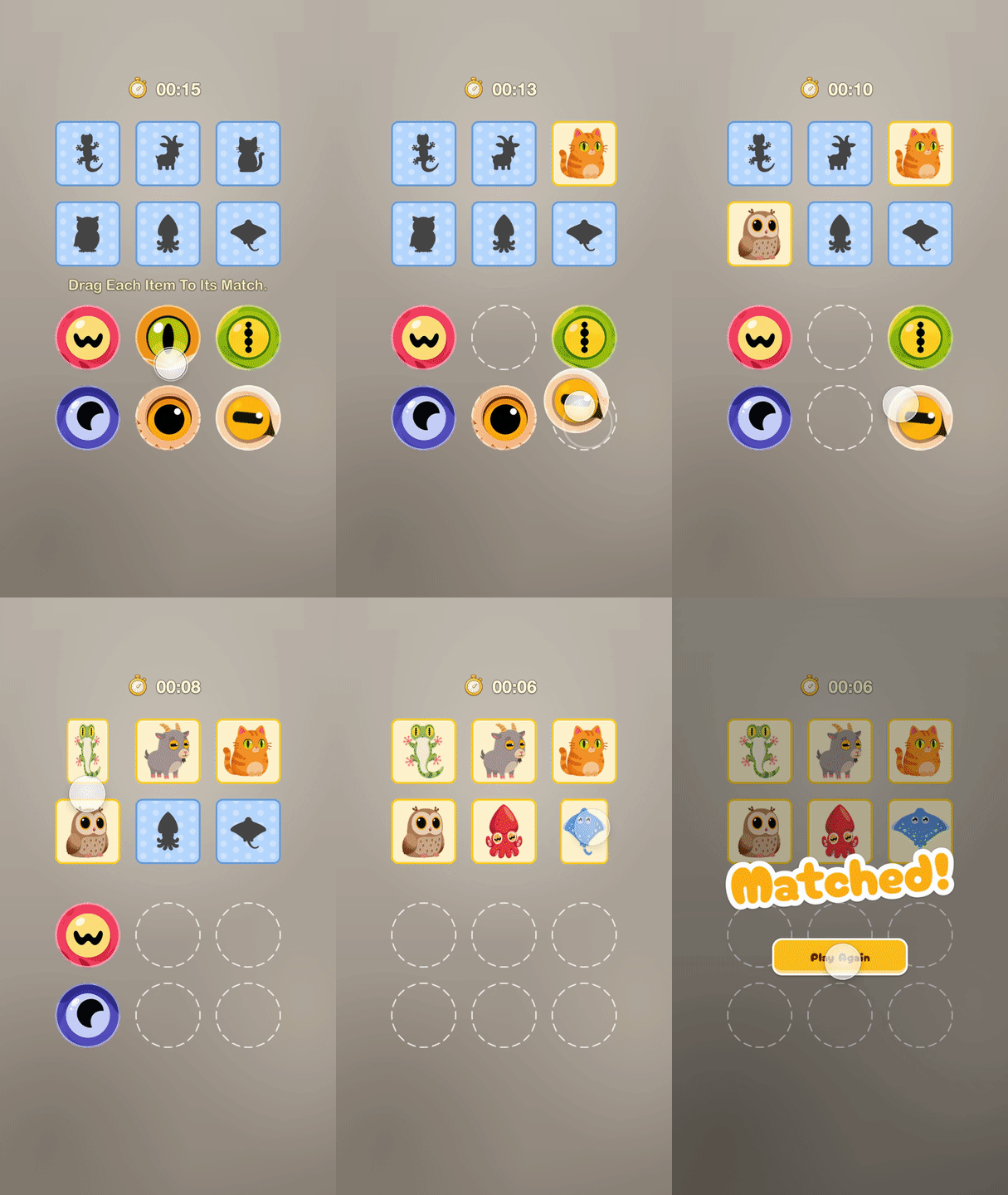
Tap at the right moment to match the target pattern.
Hold to grow the line, then release to wrap it around the shape.
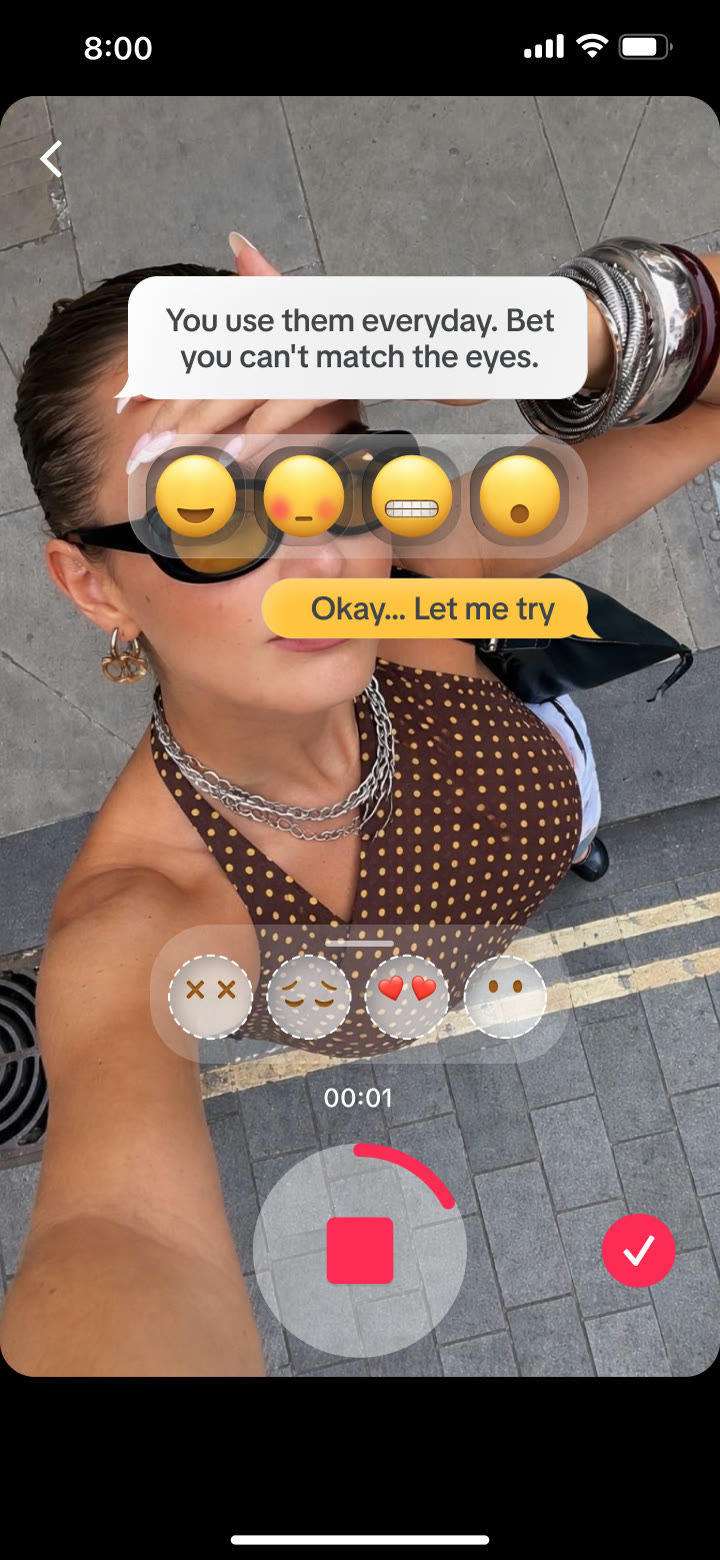
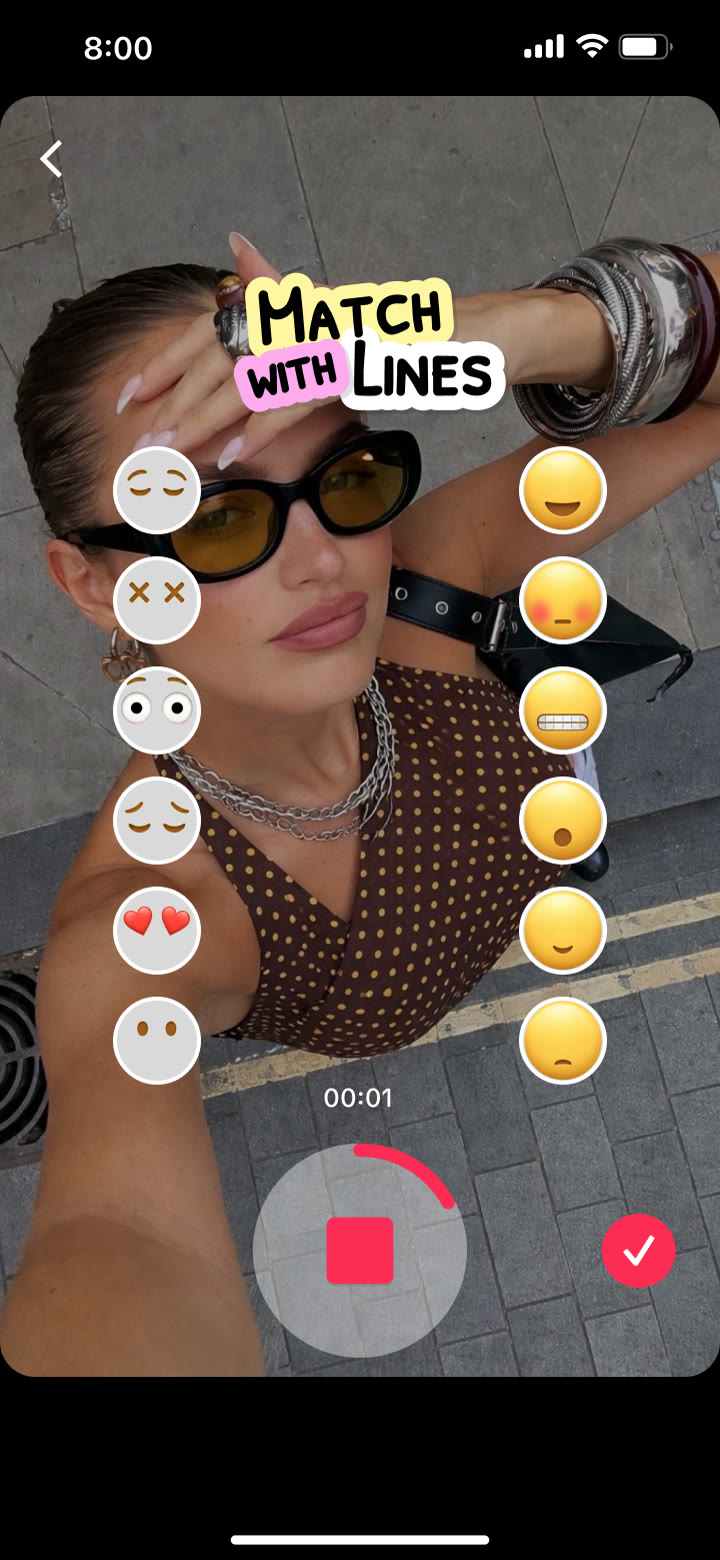
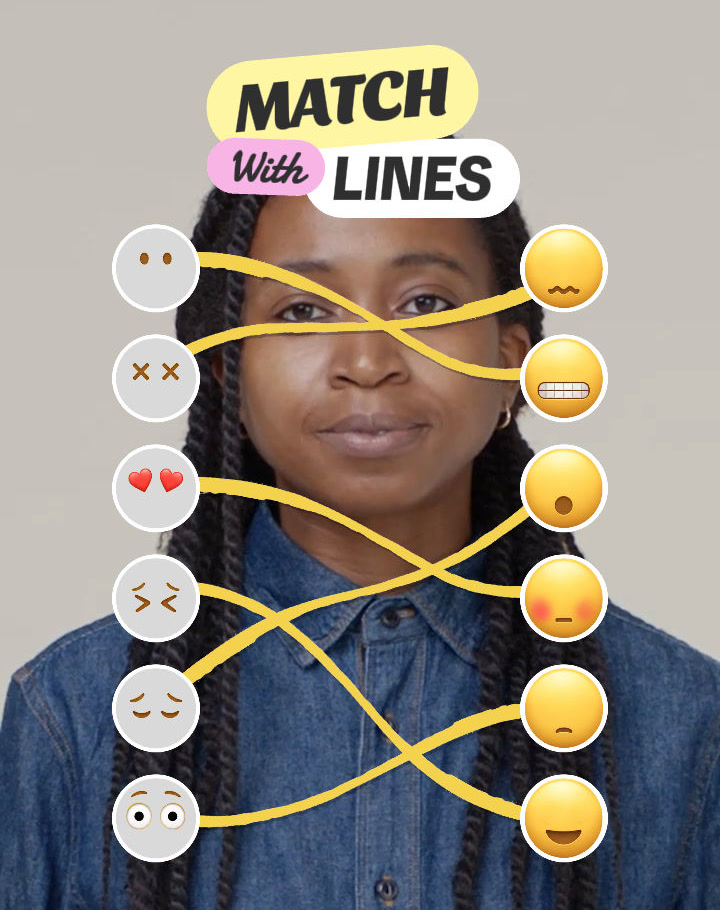
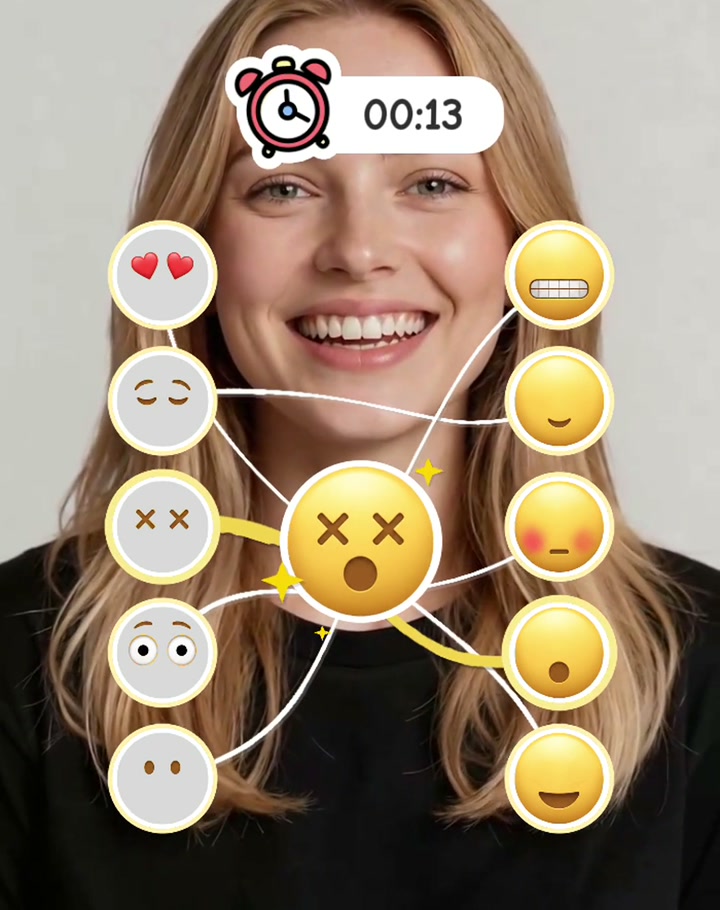
Draw a line from each pair of eyes to its matching face.
A colleague supplied Fruit Drama’s story videos. I built the effect, synced the audio, and added portrait segmentation, with R&D helping fix the game reset when recording starts.
All four templates shipped. These are web versions of them: background images replace the camera feed, and Fruit Drama omits portrait segmentation.
THE TEAM ASKED ME
TO GO FIRST
A PM wanted a new kind of game template. Effect House AI had just connected the editor to AI coding tools like Claude Code and Codex.
The team asked me to explore the new AI connection through Fruit Drama. I brought my experience building image tools into Effect House and carried the game from prototype to release.
FRUIT DRAMA
I took connection and game reset problems to R&D, with a specific question each time.
TAKE A SPECIFIC PROBLEM TO R&D
The game ran, but starting a recording did not reset the game.
I worked with R&D to establish the connection between the AI coding tool and Effect House before continuing the build.
I proposed reusing an older visual script. R&D chose a new reset implementation, and we reviewed the complete recording sequence together.
We tested the full sequence: start recording, choose a story branch, then record again.
RECORDING AND STORY FLOW
What the published effect does at each point, and who owned it.
| STATE | INPUT | FEEDBACK | RESET RULE | OWNER |
|---|---|---|---|---|
| Recording starts | Start recording | The story starts fresh | Reset when a recording begins | R&D built the reset; I reviewed the sequence |
| Story choice | Choose a card | The story follows the chosen branch | Reset on the next recording | I built the choice interaction and synced the story audio |
| Next recording | Start recording again | The story starts fresh again | The same recording reset | R&D and I tested the full sequence together |
TIMING MATCH CLEAR
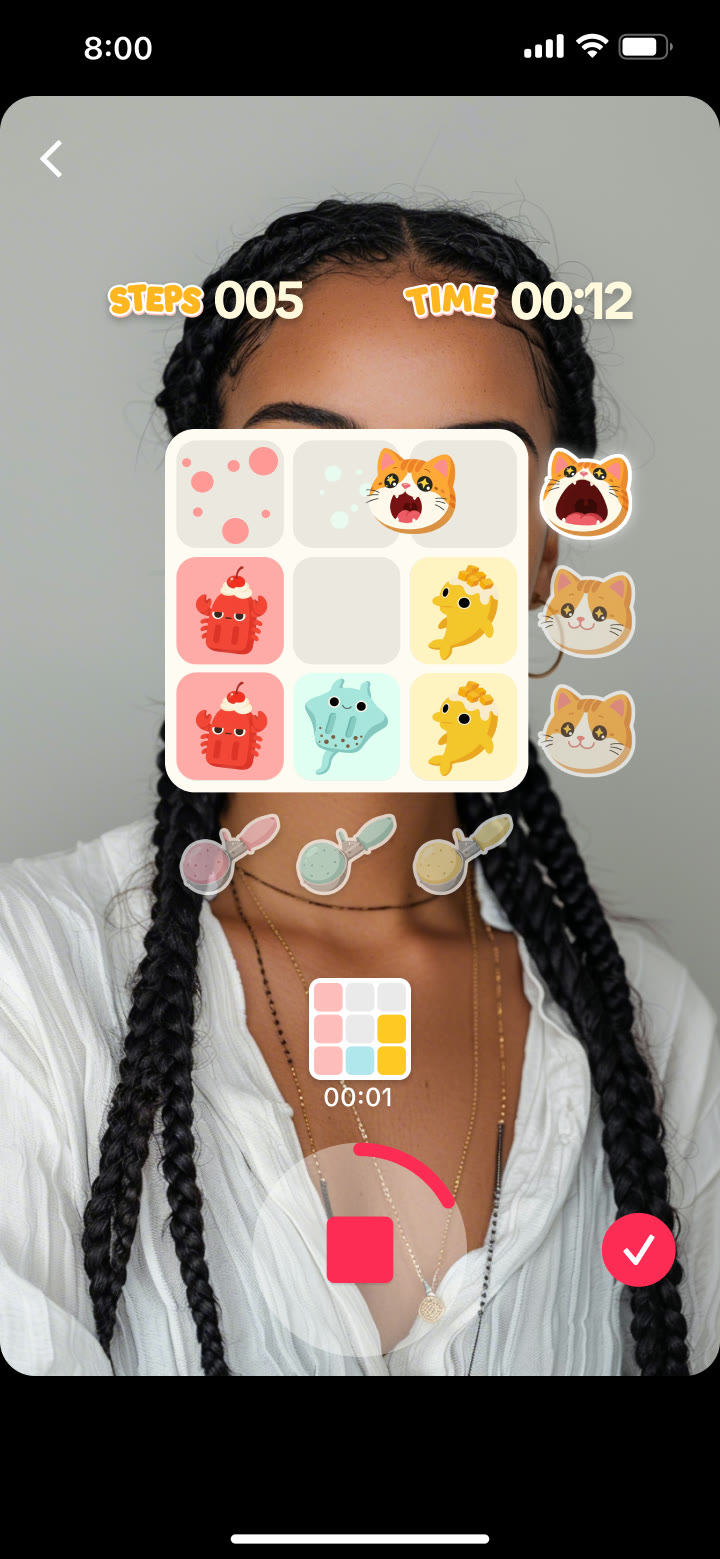
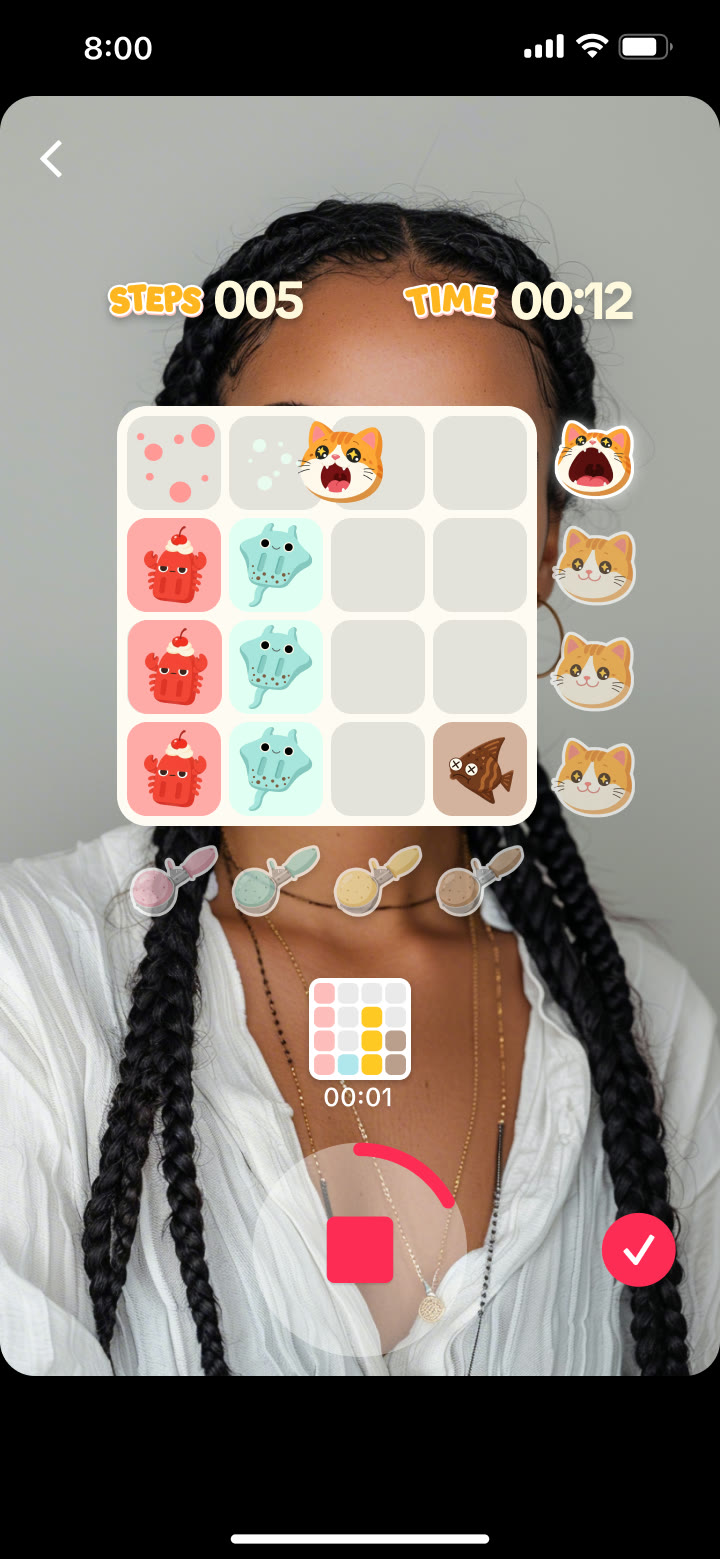
I used a playable prototype to confirm the gameplay with the PM and decide what creators could adjust.
CONFIRM THE GAME
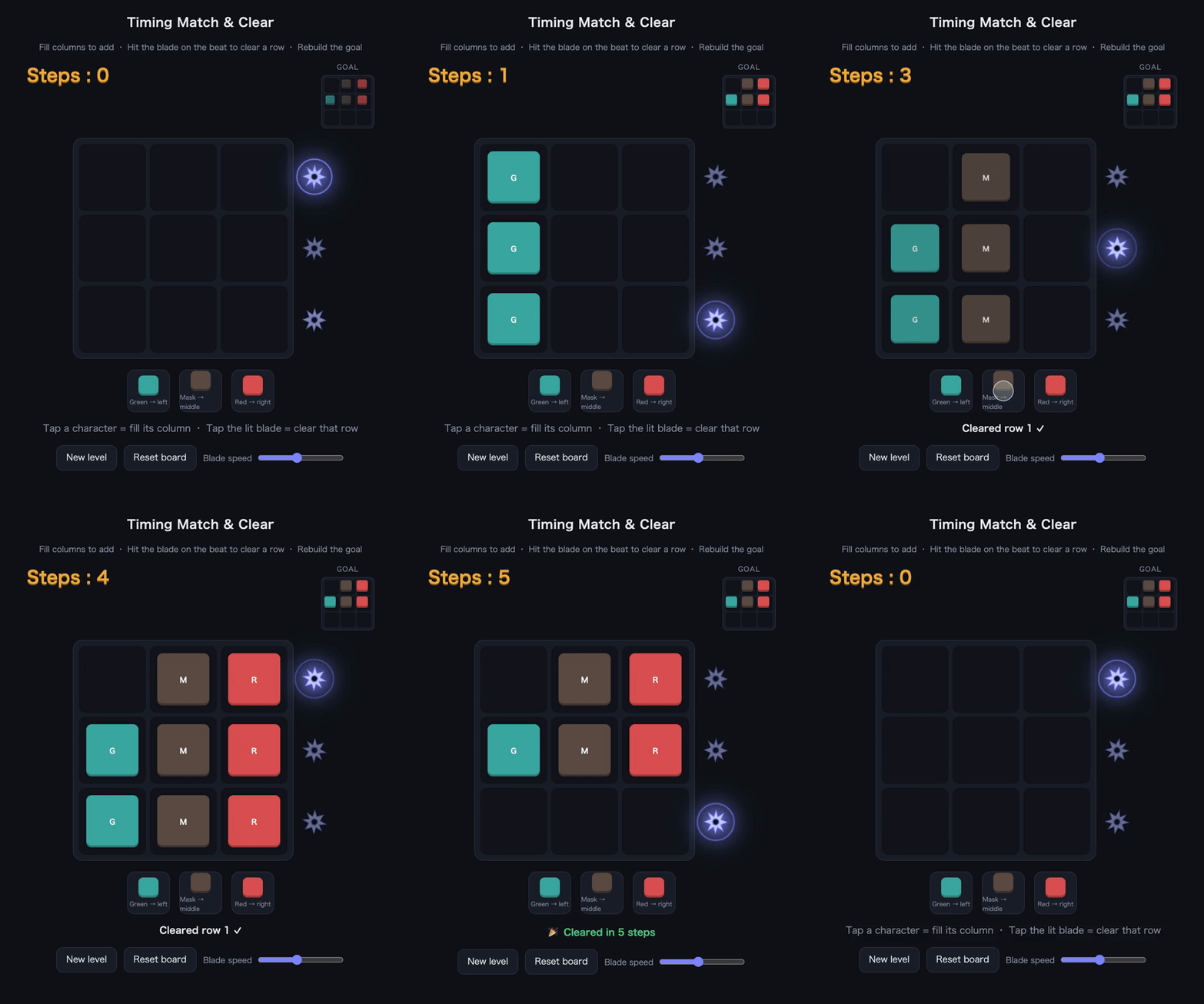
The brief read like a coloring game, so I built a playable prototype to find out what made this one different.
I asked the PM how filling and clearing should work together, then used Codex to build the prototype for the PM to play.
The PM confirmed that players had to match the target shape by timing their taps.
FIX THE LEVELS, THEN DEFINE THE CONTROLS
By the time the PM reported unwinnable levels, I had already fixed them.
I changed how target patterns were generated to prevent floating tiles and gaps. After the PM completed every level, we agreed to expose grid size, speed, turn order, and level progression as creator settings.
Timing exposed grid size, speed, turn order, and level progression as creator controls. In the next template, I reduced the artwork creators needed to replace.
LINE DRAWING PRECISION
I reduced the artwork creators needed to replace, then reorganized the settings around their next task.
STOP THE WRONG BUILD
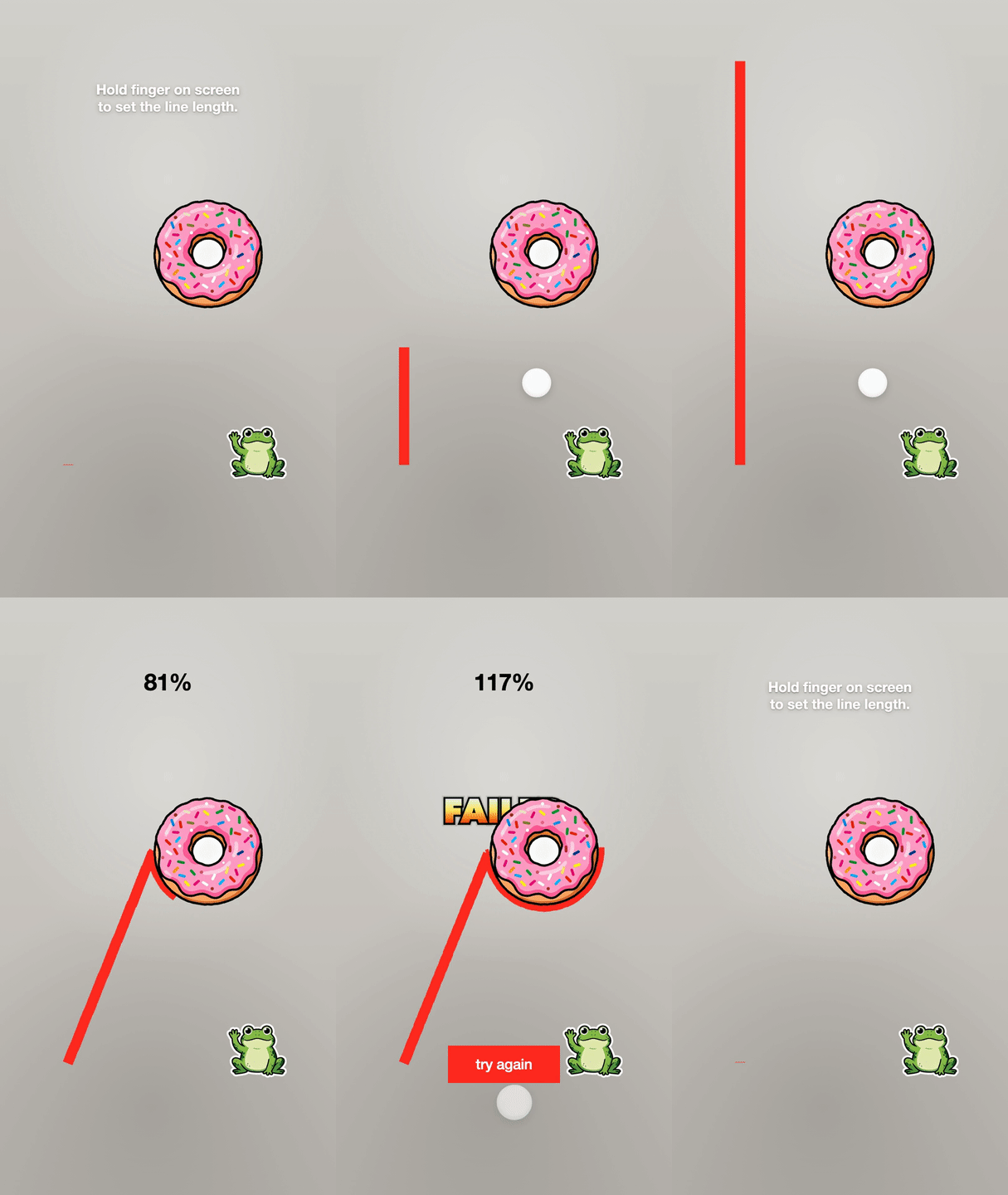
The first build missed my design, so I stopped it and tested how the line grew and wrapped after release.
After the project lead flagged how much artwork the frog scene needed, I cut customization down to one central image.
I had the AI document the unfinished build, started a clean session, and fixed the problems one by one, from the shape to the rope.


MAKE THE IMAGE FIT THE GAME
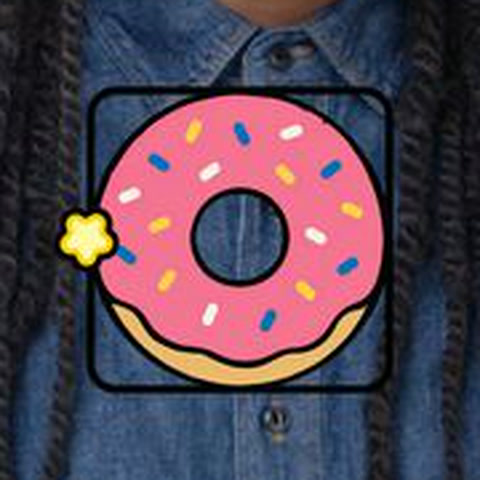
Testing a new image exposed a missing mask, so I made four reusable shape masks.
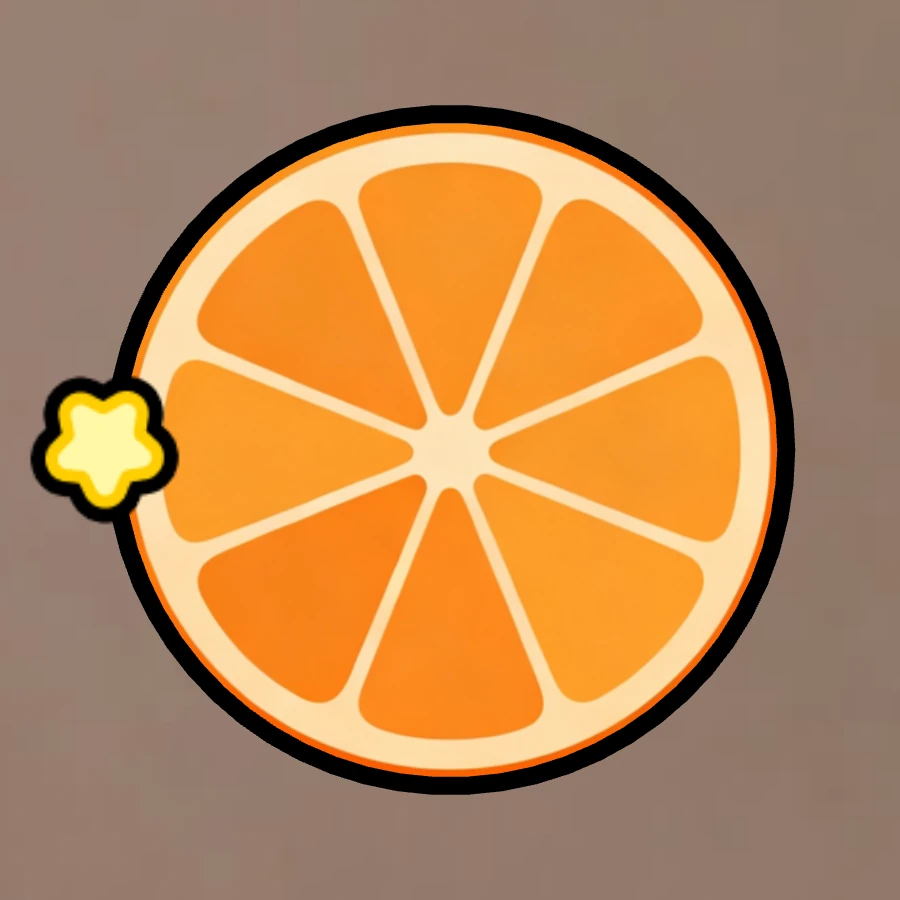
I generated an orange in Effect House to test the image swap.
The masks let creators replace the artwork without redrawing the game outline.





MATCHING WITH LINES
When a senior review reopened the direction, I rebuilt the game around clearer rules.
DEFINE THE GAME BEFORE REBUILDING
A later review with a more senior design lead reopened the gameplay direction. I defined the matching rules before rebuilding.
I had refined the animal build through reviews with my design lead and addressed issues from a self-check against our template standards, and it was ready for testing.
I next explored emoji matching, but questions about showing six targets at once prompted me to reconsider the interaction before developing more visuals. Using the lead’s framework for the hook, interaction, progression, and payoff, I settled on connecting eyes to faces across two columns.
I translated that decision into a specification covering matching rules, line behavior, pair count, and round length, then started a new build.
MAKE THE LINES FEEL HAND DRAWN
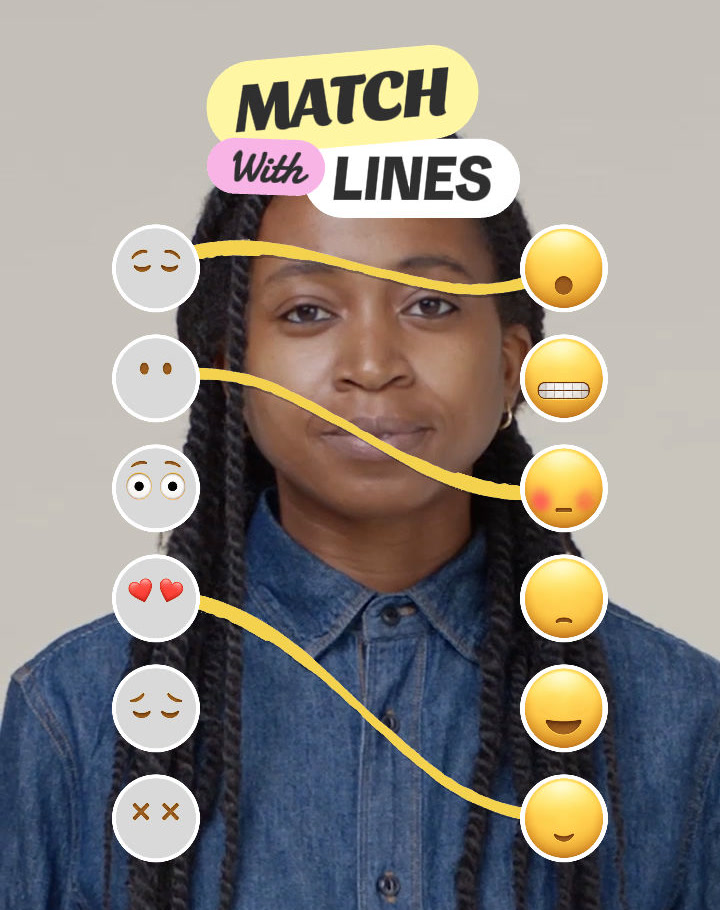
With every line on the same curve, the lines ran parallel and looked mechanical, so I asked for each line to bend differently.
I shared a curve reference and checked each revision in the game, with all the pairs connected.
THEN THE TEAM FOLLOWED
HELP THE NEXT DESIGNER THROUGH
By October, four of us had made 23 templates with Effect House AI.
When another designer also could not tell whether the AI tool was connected, I reported the repeated problem to the tool team: community creators would face it too. The tool team added a visible connection indicator.
R&D wrote the setup guide and ran a workshop; I answered teammates’ setup questions and raised designers’ questions during the workshop.
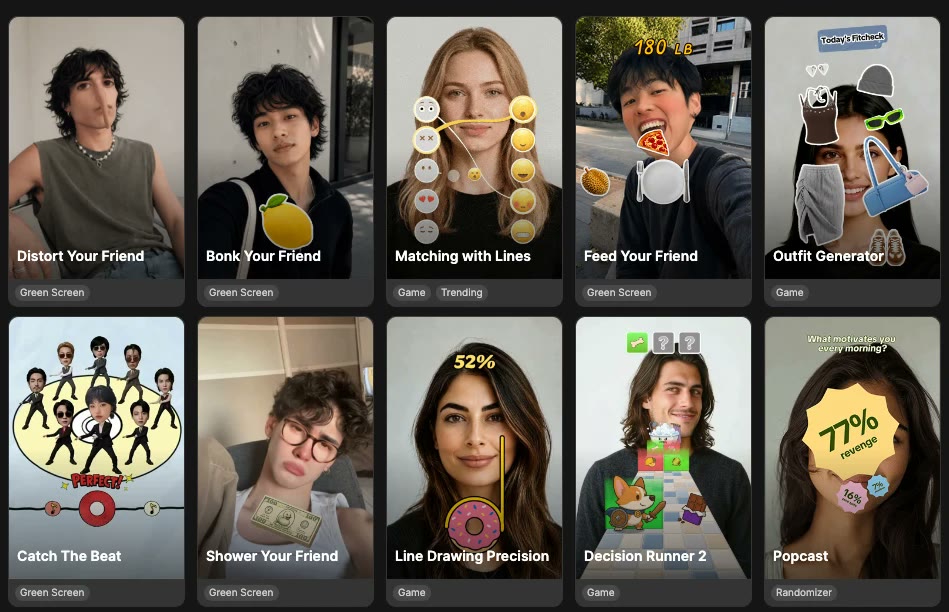
LEARNING TOGETHERThis was not the first time I helped a team learn a new tool. In 2023, I started Effect House learning sessions with an interactive engineer, built around real projects.
Going first meant turning each blocker into a specific question, then working with R&D to carry the template through to release.