MILTON HERSHEY SCHOOL
I brought an archival portrait to life across a dome and tested text until it read on layered fabric. I built VR previews and tuned both projections on site, because scale, pacing, and readability had to be judged in the room, not on a monitor.
- PROBLEM
- A dome and layered fabric changed how motion and text could be read.
- MY DECISION
- I judged scale in VR and tested type, contrast, and timing on the real surfaces.
- SHIPPED
- Milton’s Legacy and Deed of Trust were installed in Founders Hall.
- EVIDENCE
- The installed dome and scrim footage shows both projections at architectural scale.
THE RESULT
MOTION DESIGNED FOR THE BUILDING
A segmented dome and a layered fabric scrim each changed how scale, contrast, timing, and movement would read.
MILTON’S LEGACY
I animated an archival figure and built VR previews to judge its scale and pacing across the dome.
FROM A SINGLE PHOTOGRAPH TO A PERFORMANCE
The portrait gave me Milton’s face. I performed the gesture myself on camera, then composited it into the archival scene.
One of the rotunda sequences needed to bring Milton Hershey into motion with only limited archival imagery. His portrait provided a likeness, but the scene still needed a believable gesture, rhythm, and physical presence.
I performed and filmed live-action reference myself for the movement and the objects he handles, isolated the performance, rebuilt the figure with Milton’s portrait, and composited it with archival props and environments. Dropped frames, texture, shadow, and layered imagery made the movement feel as if it belonged to the old photographs.
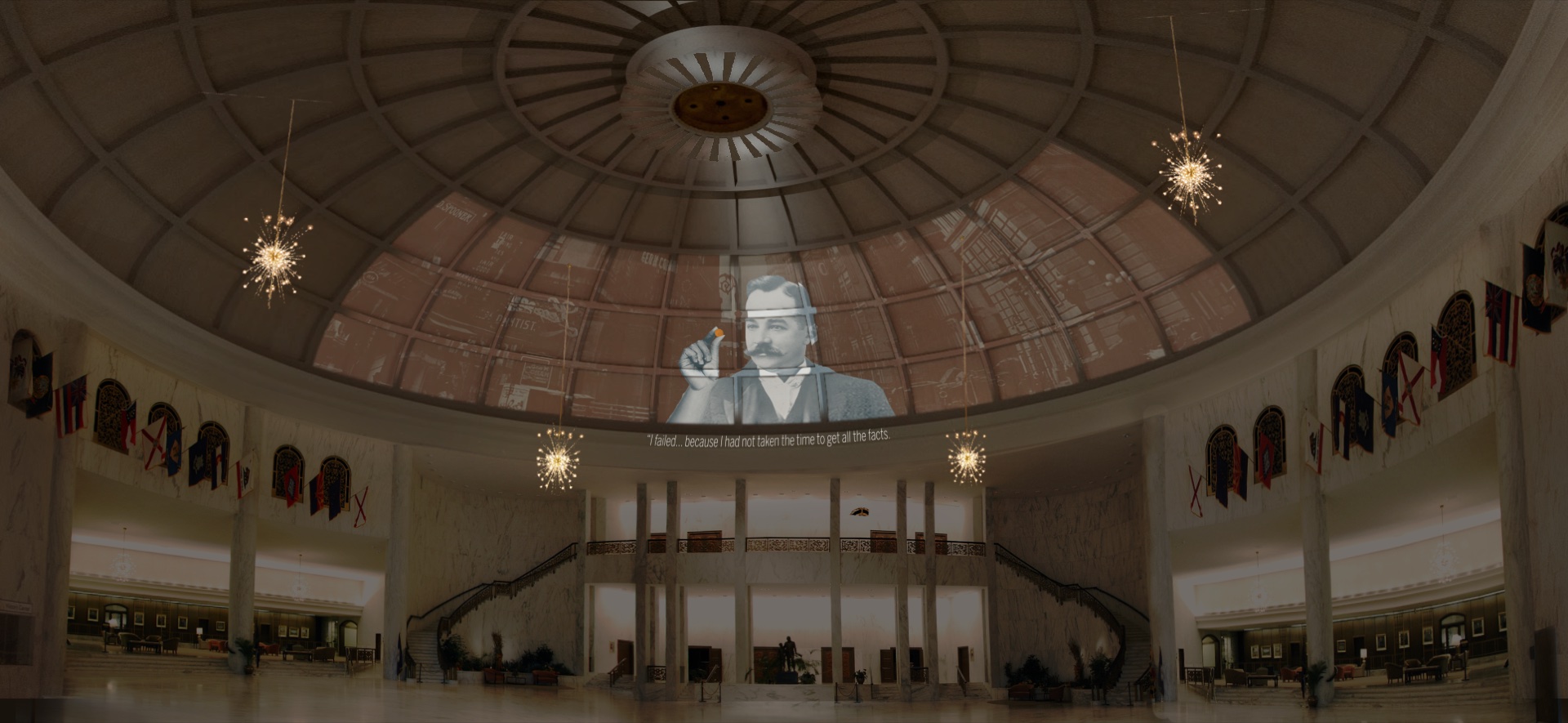
BUILDING THE ROTUNDA IN VR
Starting from the school’s official architectural model, I built the VR previsualization myself and placed the animation inside it.
Standing where visitors would stand, I judged viewing distance, image scale, movement across the dome, and the pacing of the whole sequence before final rendering.
DEED OF TRUST
I tested type size, color, and backing panels to make the projection readable across layers of fabric.
DESIGNING FOR TRANSLUCENT PLANES
The same text could look clear on one fabric layer and blurred on another, so I tested it on the projection surfaces.
Deed of Trust created a different spatial problem. Its imagery was projected across layers of translucent fabric, so front and rear placement could change the clarity of the same element.
I built and documented a projection study comparing type size, dark backing panels, glow, color, and placement across the layers. Small type blurred on the front screen, heavy glow softened the edges, and light cream or yellow stayed clearest against darker backgrounds.
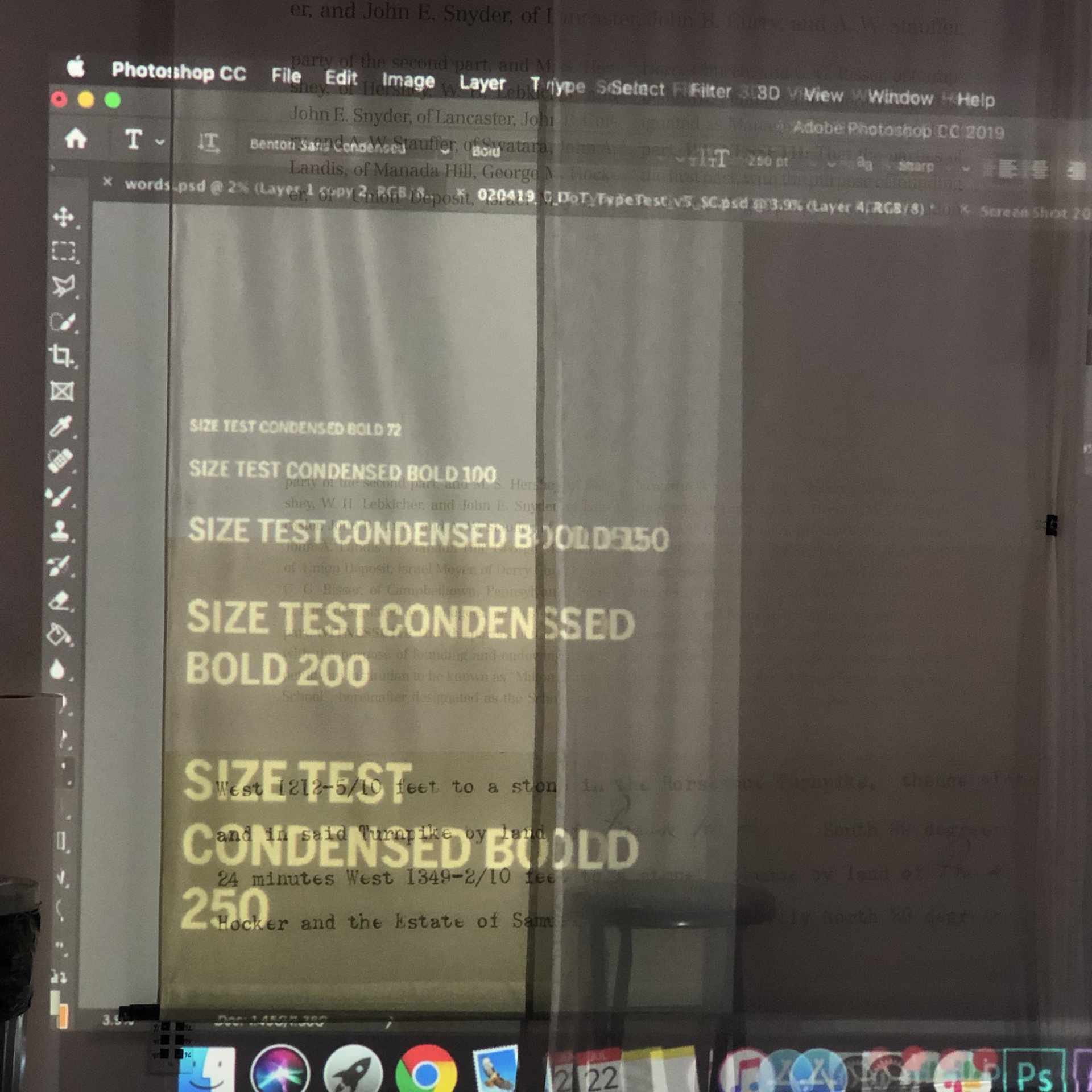
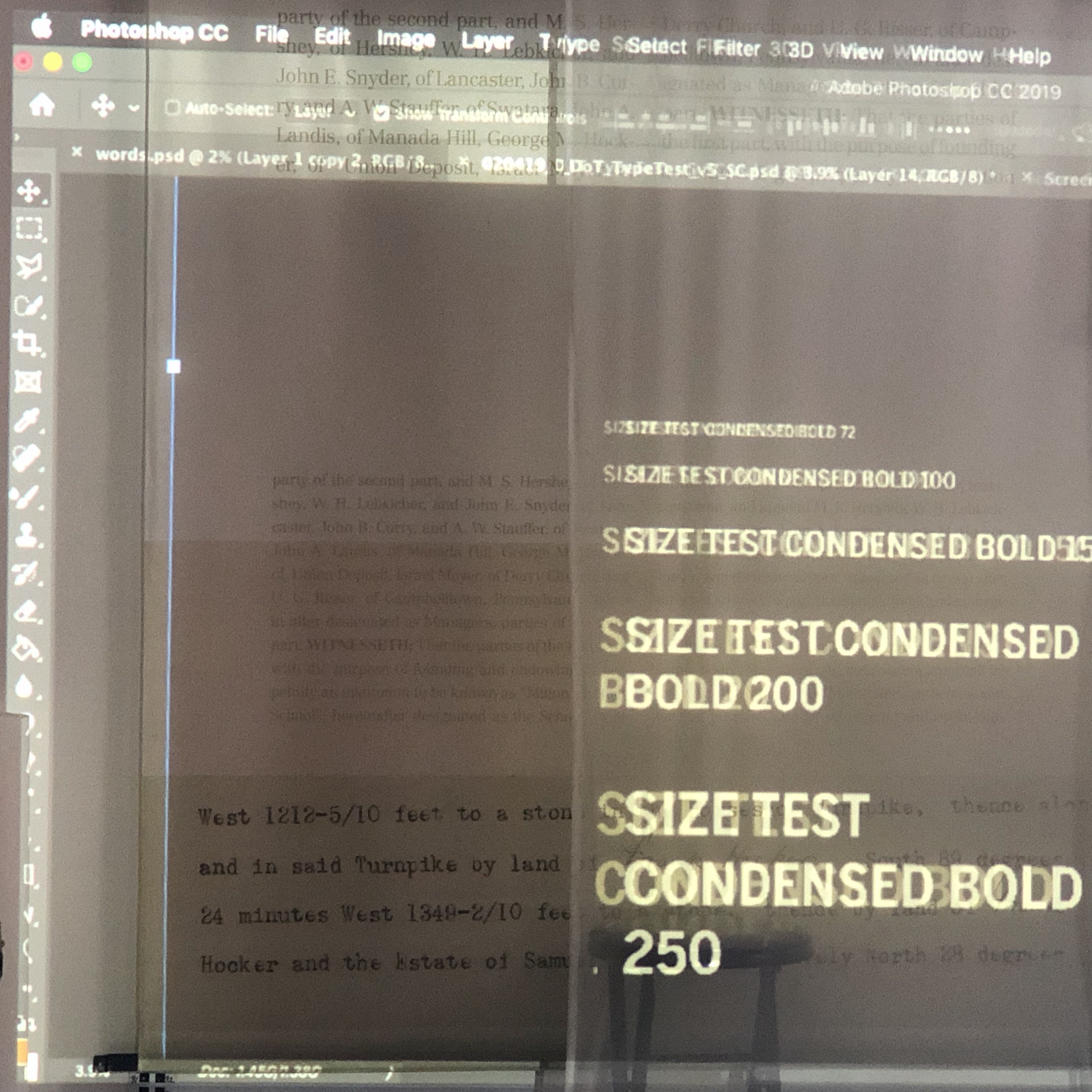
The work did not end at the render: I tested and tuned both projections on the installed surfaces, and I completed the final installation for both pieces.
Every pass checked readability, scale, contrast, and timing on the real dome and scrim.