MLK LIBRARY D.C.
I animated and edited two of the exhibition’s three films. On the curved gallery screen, some scenes needed a different pace, so I revised their motion scene by scene.
THE RESULT
CONNECTING KING’S LEGACY
WITH WASHINGTON, D.C.
Three films explored connections between King and the city, including his support for D.C. home rule and his relationship with Nannie Helen Burroughs, a civil rights activist, educator, and early supporter of King.
The Martin Luther King Jr. Memorial Library is a landmark in Washington, D.C. For its core exhibition, Bluecadet collaborated with the library’s curatorial team and exhibition partners to tell the city’s ongoing history of activism.
Two motion designers shared production across the three films. I animated and edited the Home Rule film and the Nannie Helen Burroughs film.
HOME RULE
King’s support for D.C. home rule, told through archival documents, newspaper type, and line animation.
FROM ANIMATIC TO FINE CUT
I timed the whole film as an animatic first, with the narration in place, before finishing any scene.
The animatic ran 4 minutes 19 seconds and the fine cut 4 minutes 27, only eight seconds longer. The scene about the district’s voteless citizens kept its structure from one to the other: the ballot box closes, the crowd gathers in orange, the committee sits above them.
DRAWING THE CITY IN LINE
The Home Rule film’s buildings are drawn in line, from the row houses to the monument in the Life Inside a Monument passage.
A comp test checked the line drawing against the paper texture before the scene went into the edit. In the fine cut the row houses draw themselves in under the narration about the District’s every act, from dog licensing to levying taxes.
NANNIE HELEN BURROUGHS
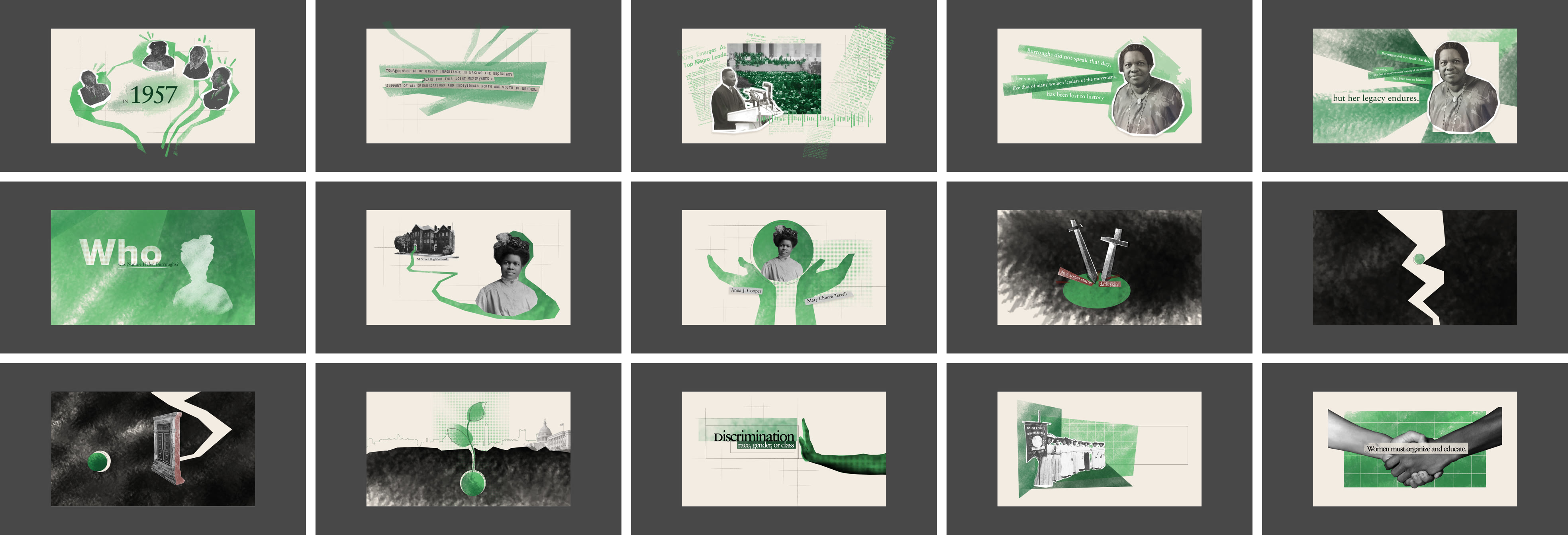
Fifteen storyboard frames became a film built from archival photographs, documents, type, and line animation.
TURNING A CONTENT FRAMEWORK INTO A FILM SEQUENCE
Working from the script and content structure the teams provided, I turned the Burroughs material into a shot-by-shot storyboard.
The curatorial and project teams provided the script, content structure, and archival material for the film. The visual language was also developed collaboratively for the wider exhibition, using archival imagery, typography, texture, line animation, and a distinct color for each featured figure.
The boards established how each passage would unfold on screen and gave the team a structure for developing the film’s animation and edit.
CARRYING THE STORYBOARD THROUGH MOTION AND EDIT
Archival photos, documents, and drawn elements had to feel like one film. I used the shared design system to carry them from the storyboard into motion and the final edit.
Because the material came from different historical sources, consistency depended on how it moved as well as how it looked. I worked with visual designers as individual scenes developed, while staying primarily responsible for the animation and edit.
REVISING THE PACING
AT INSTALLATION SCALE
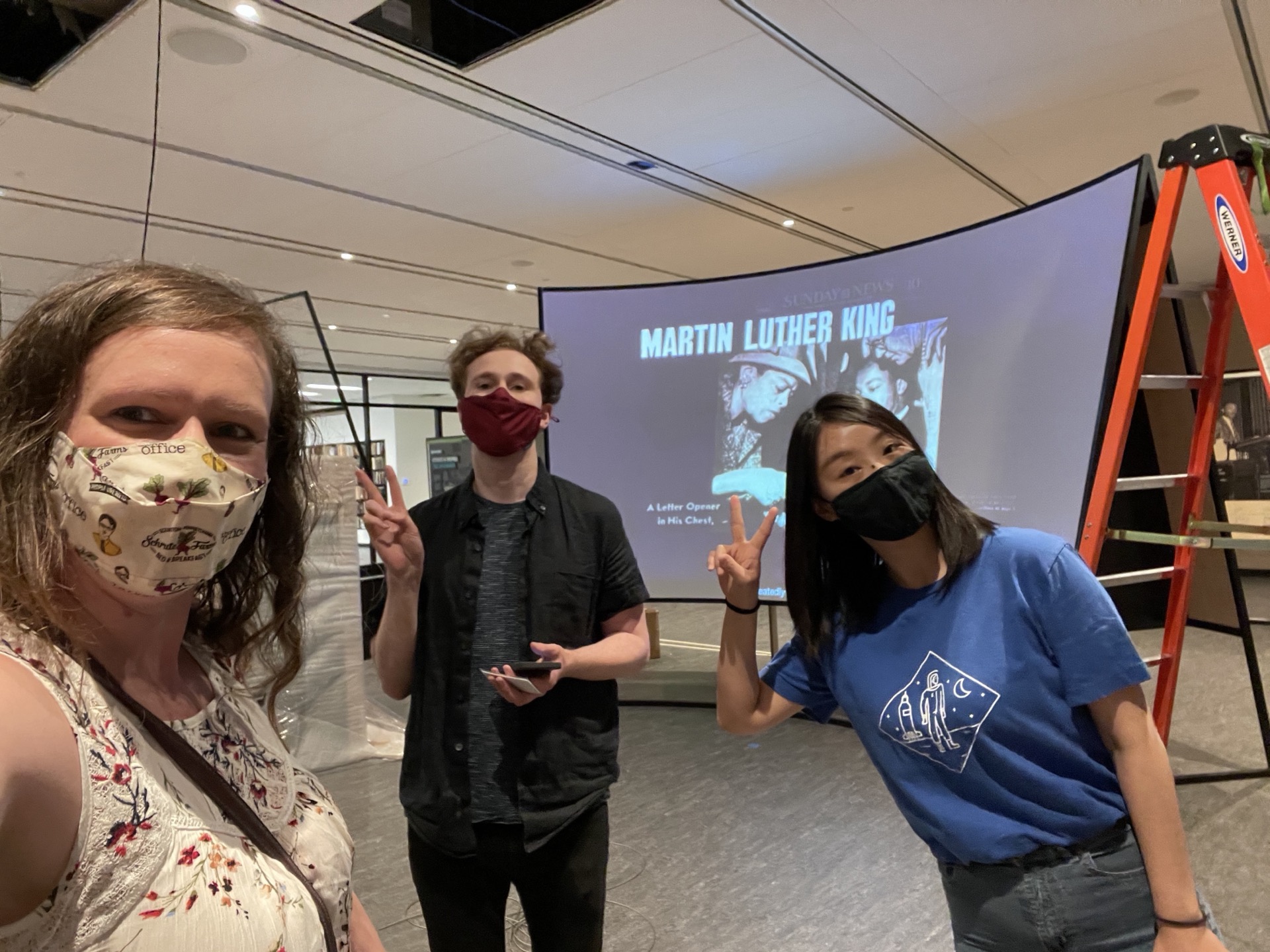
During the on-site review, I watched the sequences at full scale and noted which scenes needed pacing changes.
Timing that worked during production did not always feel the same once the films were projected in the gallery.
Each scene needed its own fix rather than one global change, so I went back to the After Effects files and revised the affected animations one by one, judging each against the installed screen.
That evening, the other motion designer and I kept revising from the hotel lobby so the updated films were ready the next day. Both films were installed in the library’s core exhibition.